
The best way to find a competitor’s real price is to have its sales rep quote it to a buyer like the ones you compete for. Mystery Demo does exactly that. It books your competitor’s demo, sits in on the pricing conversation as a credible buyer, and brings back the number, its terms and the recording of the moment it was said.
You can also research a rival’s pricing from your desk, and three methods are worth your time. They will get you close. None of them will give you the price a rival quotes in your deals.
Why a Mystery Demo Is the Best Way to Find a Competitor’s Price
There are two reasons.
1. The price that matters is only said on a sales call. A pricing page shows a list price, a starting price, or nothing at all. Here is what three well-known pricing pages showed in October 2026:
| What the page shows | Example | What it tells you |
|---|---|---|
| Every plan has a price | Salesforce lists its Sales editions from $25 to $550 per user per month, then says to “contact a sales representative for detailed pricing information” | The list price, before any deal is discussed |
| The top plan has a button instead | Jira: “Contact our sales team for Enterprise pricing, available only for annual subscriptions” | What the smaller plans cost, not the one you compete on |
| No price at all | ServiceNow’s IT service management page offers a custom quote and a custom demo | Only that the price is set in a conversation |
The number you need is the one the rival quotes a buyer like yours. It depends on the seats, the contract length and how soon the buyer has to decide, and a rep only names it once they know those things. That number is said on the call, and at best confirmed in writing afterwards.
2. You can’t be on that call as yourself. The Contact Sales button is not only there for buyers. One SaaS founder who hid pricing behind it for two years said the leads they lost when prices went public were “tire-kickers and competitors doing research.”
When your own team books the demo, a rep who spots your company’s email domain gives you the generic tour, or no tour at all. Mystery Demo arrives as a believable buyer, so the rep runs the real pricing conversation. Every number comes back on a recording, with its terms attached.
How Mystery Demo Finds a Competitor’s Real Price
Every project starts with your deal. Before anything is booked, you tell us what we are pricing:
We build the buyer from that: a believable company that needs that tier, at your seat count, with a deadline that makes a rep take it seriously. Each competitor meets a version of that buyer fitted to the customers it sells to. The only invented part is which company is asking; the evaluation itself is real.
Then we agree the questions with you. Below is the objectives page of our public example board, where the client and every competitor are invented. A pricing project starts from the first objective you see there: how each vendor structures its price, what sits in its entry tier, and where the discount levers are.
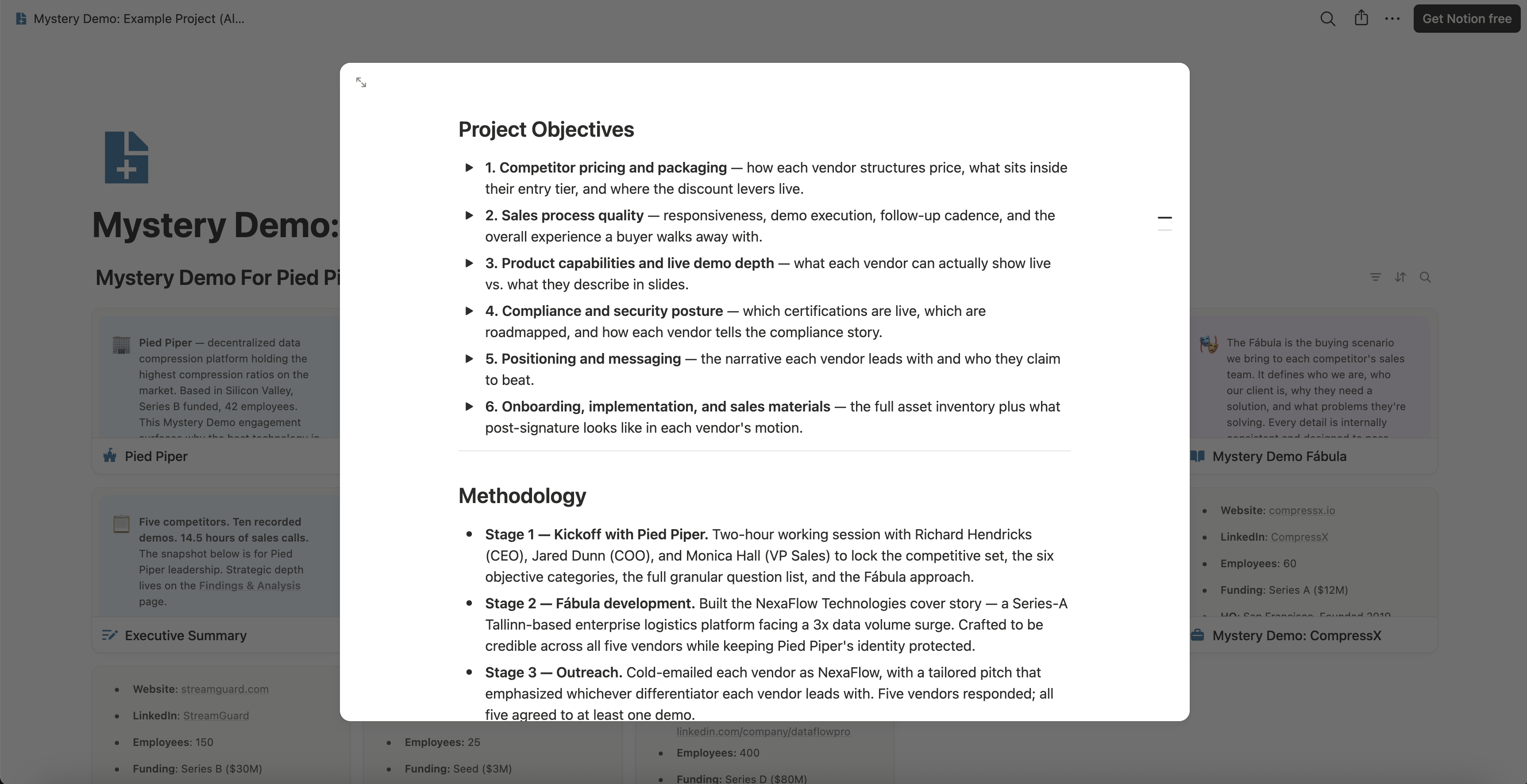
On a pricing project, the buyer carries questions like these into every call:
Next, we book the demo through the same form any buyer uses. Operators who have sold B2B software themselves sit every call, from discovery to the pricing conversation, and read every follow-up email. They know which question moves a rep from the price list to the number the rep is allowed to offer.
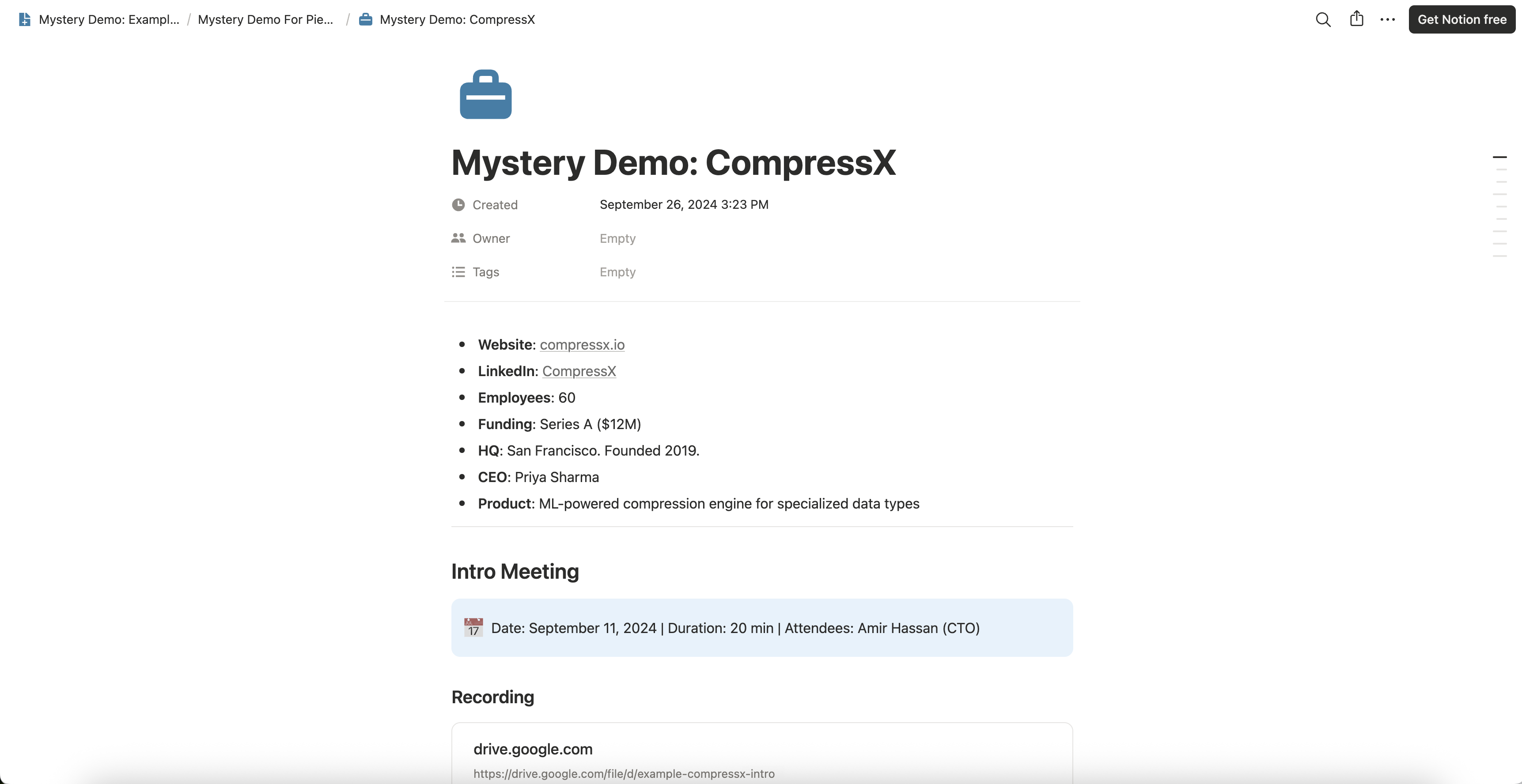
Every call is recorded and every email is kept. Each competitor gets its own page on the board, with each meeting logged and its recording right underneath, like this one from the same invented example.
.png)

What you get back is the pricing matrix. Every competitor sits on one row, with its pricing model, its floor price and what the price is based on, such as seats or usage. A transparency column shows how each number surfaced, from a public page to a figure said on the call.
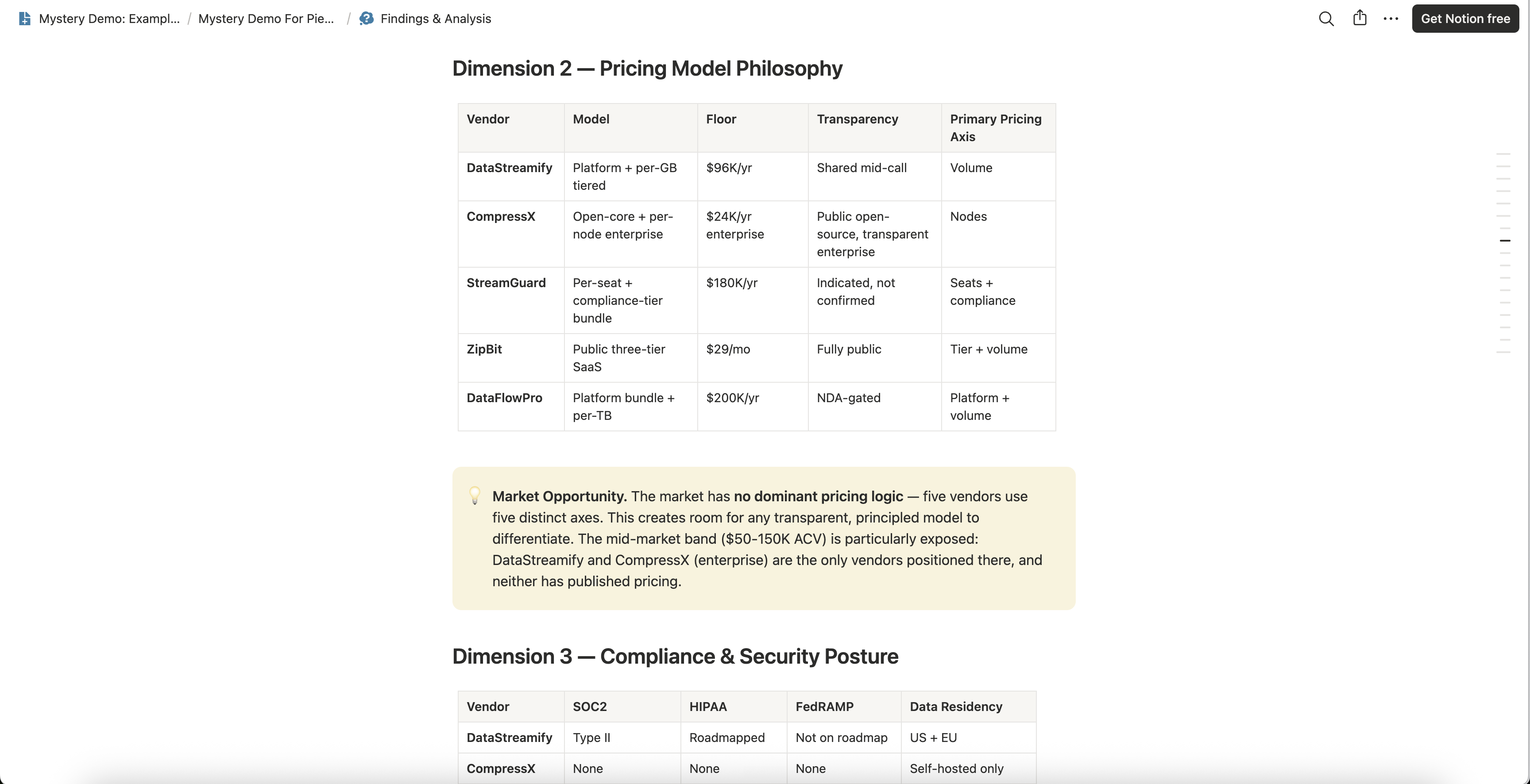
On a real board, every quoted price links back to its recording, so nobody in your pricing meeting has to take it on trust. One call shows what one rep quoted one buyer on one day. When a second rep quotes the same number, you are looking at the company’s price, not one rep’s offer.
Mystery Demo charges a flat €499 per competitor, with everything included. One competitor takes one to two weeks, and when you need a whole set of rivals priced, the calls run in parallel as one SaaS competitor pricing research project. If one rival’s Contact Sales button is already costing you deals, tell us which rival it is, and we will go and get its quote.
Three Ways to Research a Competitor’s Price Yourself
These methods don’t replace the quote, but they are worth doing alongside it, or before you commission one. They tell you what the rival publishes, what other buyers paid, and what to ask on the call.
1. Read the pricing page, then its history. Copy every tier into a sheet: the price, the unit, the seat limit, the billing term and the words on each button. Label each number with the pattern from the table above, and never treat a published price as a quote.
Then look up the page’s old versions in the Wayback Machine. A founder who builds price-tracking software described the pattern to watch for on r/microsaas. The common move, they wrote, is not a raised price but “the tier quietly turning into contact us.”
If a tier once showed a price, that old figure is your last public clue.
2. Collect what buyers say they paid. Look for prices and renewals in written reviews, and in community threads where buyers compare quotes. Ask your sales reps to log every rival quote a prospect mentions, with the date, the seat count, the contract length, and whether it was in writing.
Keep each number separate. An average blends seat counts, contract lengths and vendors that have nothing to do with your deal, and discounts differ by vendor and by term. You can see it in the published SaaS discount statistics:
A buyer’s number gives you a range, never the price for your deal.
3. Search public buying records. In the US, SAM.gov’s contract award search finds federal contracts by keyword, agency or vendor name. In the UK, Find a Tender publishes contract notices, and the G-Cloud marketplace publishes vendors’ own rate cards.
These records show terms a pricing page never shows, but one total can hide several things. One 2026 UK notice for project portfolio software gives £125,880, excluding VAT, for three years. That one figure covers the software, the setup, training and support.
A G-Cloud rate card from May 2024 lists a one-time setup fee of £4,680, or £52,416 for a custom setup, and a 12-month minimum term.
Use a record as a benchmark only when it tells you the users, the term and what is included. Otherwise it only tells you the vendor sells at that size.
Start With the Quote, Then Fill In the Rest
The desk methods show you what a rival prints and what other buyers paid. The price for your deal comes from the rival’s sales call, and Mystery Demo will sit that call for you.
Pick the competitor whose pricing you most need, and send us the seats and the term you want priced. We will come back with the number its rep quotes, its terms, and the recording to prove it.
.png)


