
The fastest way to lose a deal is to make someone ask for permission to give you money.
Mystery Demo sees that moment from the buyer’s side, for a living. We book and sit in competitors’ sales demos as a genuine buyer on a client’s behalf, from the first form field to the last follow-up. Then we hand back the recordings, the email threads and our read on them, on one Notion board.
So we fill in a lot of forms and wait for a lot of replies, and the biggest leak in most sales motions shows up before anyone joins a call. It is the “Request a Demo” form.
Think about what that button represents. Someone read your site, believed enough of it to want more, and raised their hand. That is the warmest that person has been toward you so far, and the standard B2B playbook answers it by putting them in a queue.
The “Request a Demo” Form Kills the Interest It Just Earned
You know the flow, because you have suffered through it yourself: eleven fields, company size, a phone number you will regret handing over, and a box confirming you are a real human with real budget.
You submit, and nothing happens. An email lands a day or two later proposing a slot three days after that, and by the time the invite shows up you cannot remember which tool on your shortlist this one was.
From the buyer’s seat, which is where Mystery Demo sits on every project, the leak has five parts:
The cooldown is the one with a number on it. In RevenueHero’s data from over a million inbound form submissions, a lead shown a calendar the moment it qualifies books about 80% of the time, and a lead shown it the next day books about 40%.
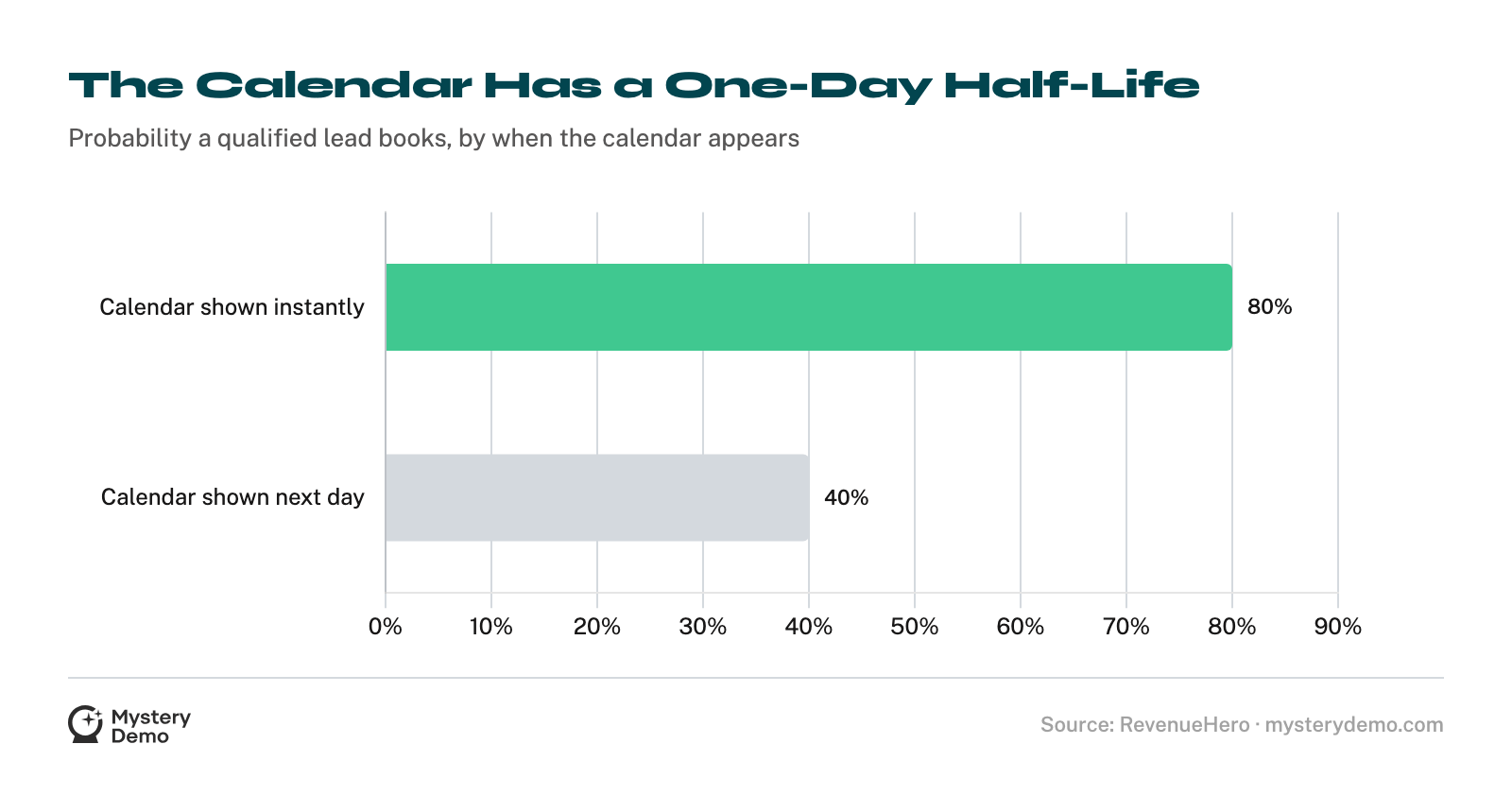
Every step in that list is a place to lose the person who, moments ago, was trying to buy from you.
.png)
The Form Is You Asking Permission to Sell
The part that should bother you most is the order of operations. The form asks the buyer for the biggest commitment first.
Before they have seen a single screen, you are asking them to commit to a live, scheduled, talk-to-a-stranger meeting about a product they have no proof works yet. That is a steep ask in exchange for a maybe.
The numbers on how pricing and demo pages convert say it plainly:
You are forcing the highest-friction path onto an audience that is openly asking for the low-friction one. A calendar does not remove the meeting, but it removes the waiting and the relay, the part of the ask the buyer gets nothing for.
And the irony, from the seat we sit in: the demo is where the real selling happens. It is where the pricing comes out, a roadmap hint slips out, the objections get handled and the discount appears, and you have gated the most persuasive thing you own behind the most annoying step you could have built.
Just Let Them Book
The fix is almost insultingly simple. Put a calendar on the page and let people book the demo directly. No form purgatory, no scheduling relay: they pick a time, they get a confirmation, and they show up while the intent is still warm.
The objections to this are mostly reflexes, and the real ones have answers:
Qualification and speed are not opposites. In RevenueHero’s benchmark, enterprise teams turn away more than 70% of inbound submissions and still book the highest share of the qualified leads that remain.
The payoff is in the demo conversion numbers. Among teams that show the calendar right after qualifying, the median team books 62% of qualified leads into a meeting. Most teams assume 35 to 40% is normal.
That figure comes from a company that sells scheduling software, so read it as what the fix can do rather than a promise of what it will do. The direction is not in doubt.

The Demo Request Predicts the Whole Vendor
Walk a whole competitive set at once and both versions sit side by side. The vendor that lets you grab a slot and replies the same day tends to run a tight process after it, and the one hiding behind a form and a wait tends not to.
The request is the first thing a buyer feels from you, and it sets the expectation for everything after it. Being the one vendor in the set that respects the buyer’s time is a competitive edge, and it takes a scheduler, not a new feature.
You can fix your own form this week. Knowing whether it now beats your rivals’ takes evidence from the other side, because their form is public and what happens after you submit it is not:
Only a buyer the vendor takes seriously sees any of that. That is the competitor mystery shopping Mystery Demo runs: we build a buying scenario fitted to each competitor, request the demo through the same front door their prospects use, and record everything from the form to the follow-up.
Operators who have sold B2B software sit the calls, and every grade on the board points back to the recording, the transcript line or the email it came from. It will not tell you a rival’s conversion rate. It shows you what their buyer meets, step by step, beside what yours meets.
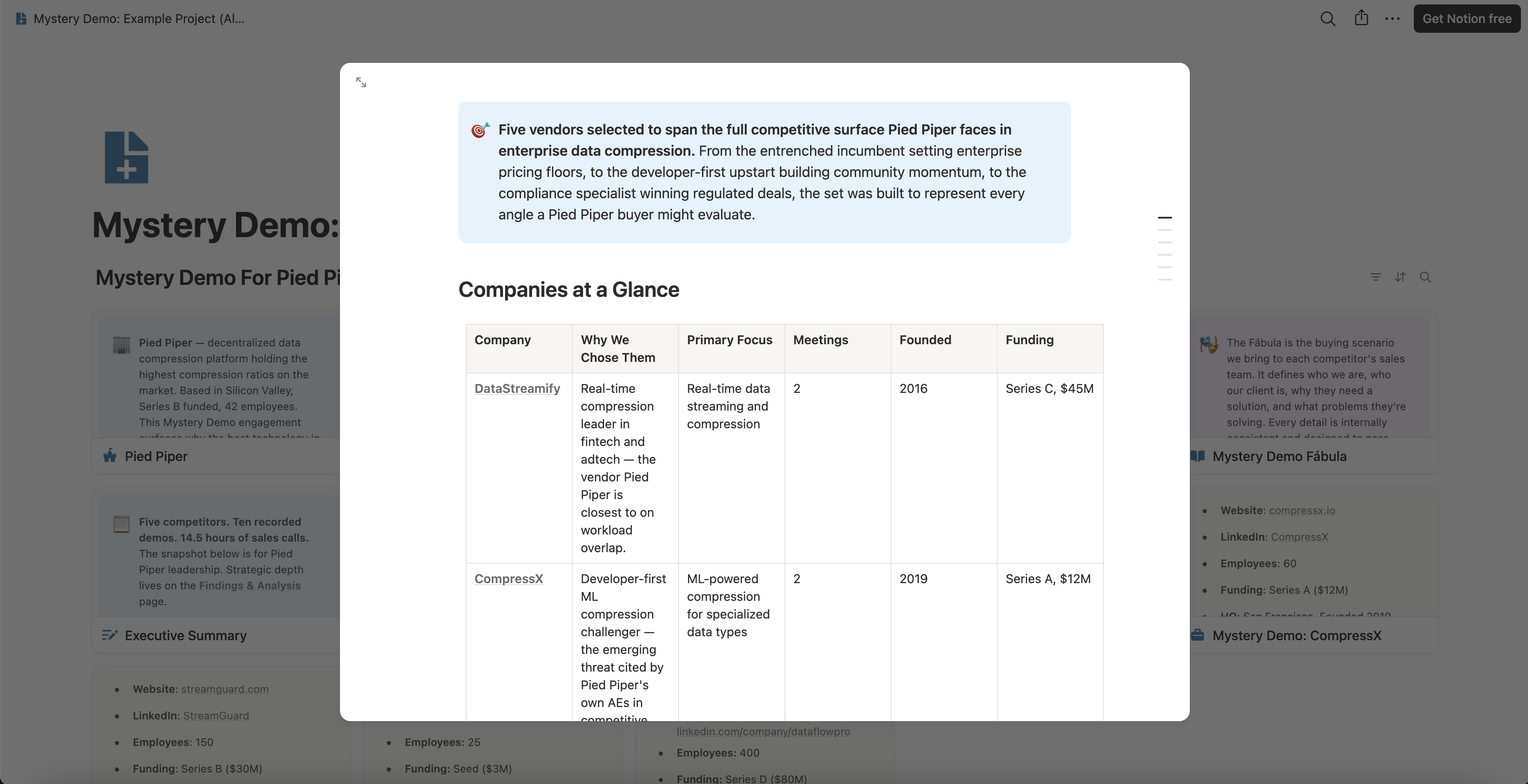
Every project starts by choosing whose front door to walk through: the competitors your buyers compare you with. Below is the Research Companies page from Mystery Demo’s public example board, where every company is invented; a real project’s board is built from its own calls. It shows which competitors get shopped, why each one was chosen, and how many meetings each one takes.
When the calls are done, the Executive Summary grades each competitor’s sales process on the same columns, and the first column is responsiveness: how fast the reply came and how easy the booking was. Demo quality, transparency and follow-up sit beside it.
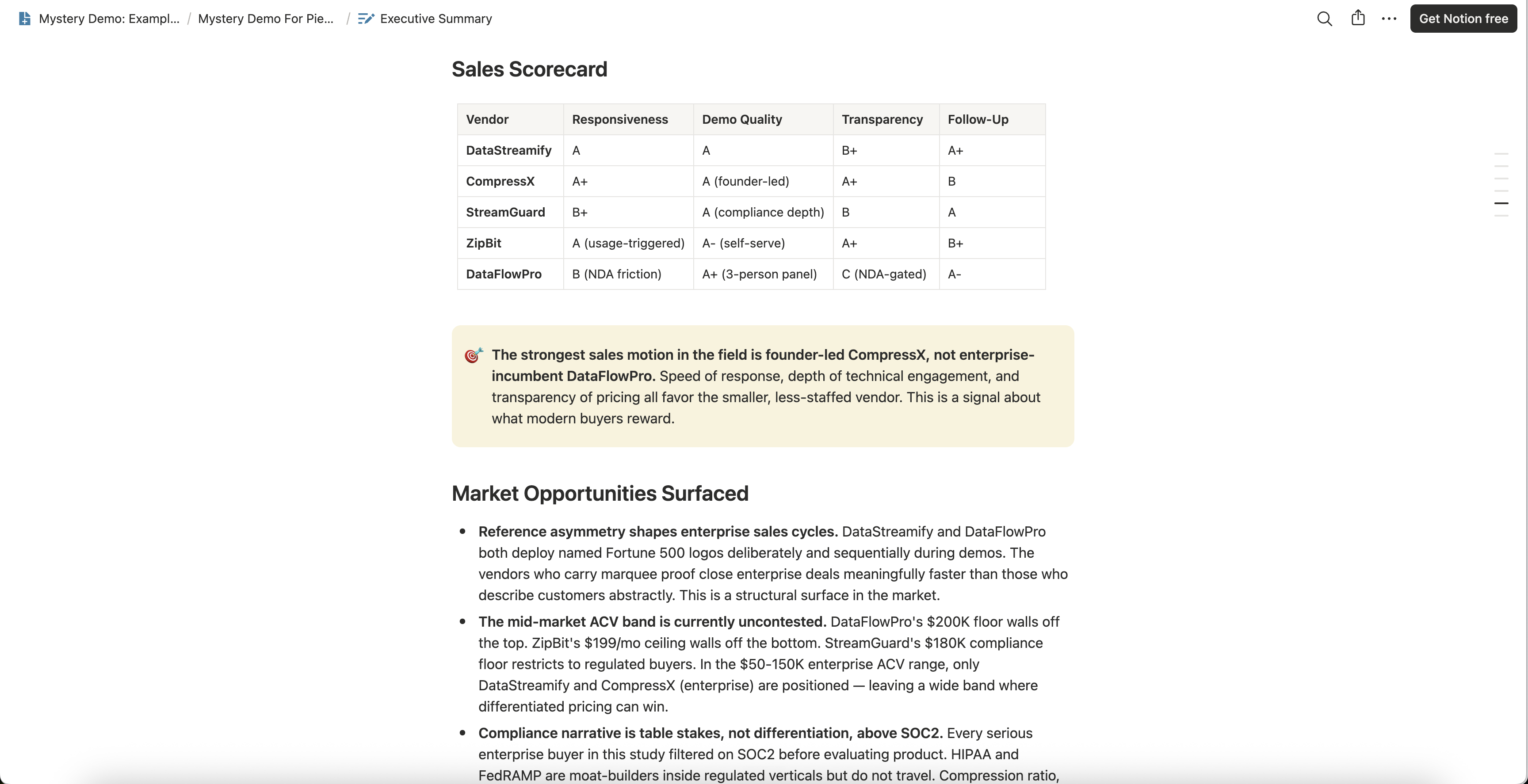
That is the core of a competitor sales-tactics review, and it runs on a fixed fee: 499 euros per competitor, every meeting, recording and the analysis included, with five competitors at 2,495 and ten at 4,990. One competitor takes one to two weeks.
If you suspect a rival’s booking flow is keeping the buyers your form loses, name that rival on a short intro call. Mystery Demo will request its demo like any buyer and time every step from the form to the first meeting.
Don’t Teach a Buyer to Stop
You spent real money getting someone to want your product. Don’t spend the next two days making them regret raising their hand.
Then pick one competitor, the one whose booking flow you suspect beats yours, or simply the one you meet most. Send us that name, and Mystery Demo will book their demo as a real buyer, sit through the whole flow, and put the response time, the booking path and every friction point we hit on one board you can check.
.png)


