
SaaS price increases do not arrive as a single number. They arrive as a renewal quote that is 15% higher, a feature that quietly moved up a tier, and an AI line item nobody budgeted for. Ask three people what SaaS prices did last year and you get three honest, contradictory answers.
This article collects what the published research says about how often vendors raise prices, by how much, what happens at renewal, and what buyers will tolerate. Nothing below is an estimate; each figure points to its published source.
We spend our weeks inside competitors’ pricing conversations. A crafted fábula, a believable company profile and buying scenario, gets us in as a real prospect, so we leave with the quote rather than the pricing page.
Software Spending Is Growing Faster Than the Budgets Behind It
Start with the macro number, labeled honestly. Gartner forecasts worldwide enterprise software spending to grow 15.2% in 2026, up from 11.9% growth in 2025, reaching $1.433 trillion.1
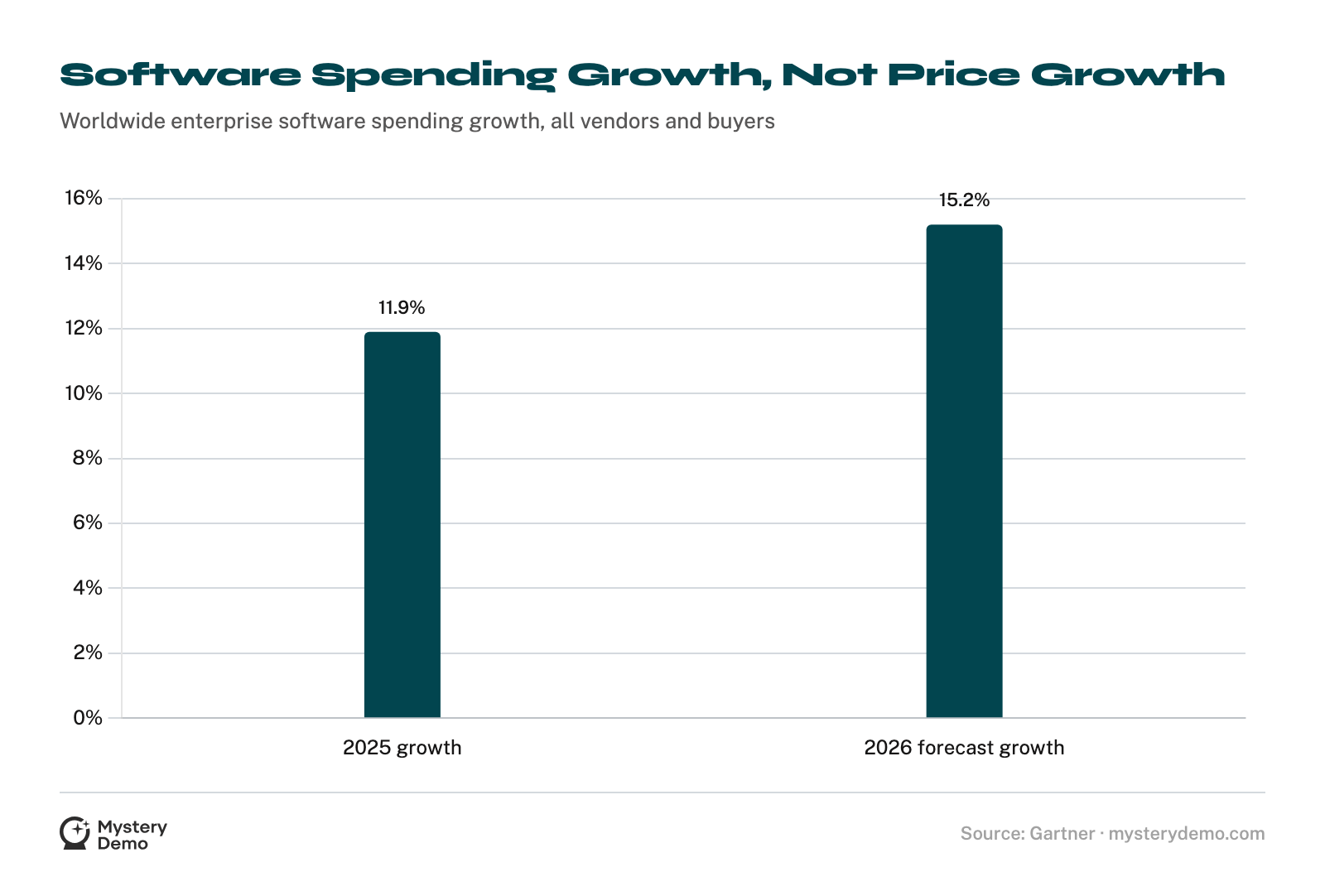
That is total market spend growth across every vendor and buyer combined: new purchases, expansion, and price, mixed together. It is not a measure of how fast anyone raised a price. It is the number people reach for when they want to say prices rose 15%, and it does not say that.
Gartner’s own distinguished VP analyst, John-David Lovelock, offered a qualitative read in the same October 2025 release. Gartner never ties it to the software line’s specific growth figures, which is why it is color here and not a measured statistic.

The Average Price Increase Is a Number Almost Nobody Pays
Gartner VP analyst Mike Tucciarone told CIO that SaaS subscription costs from several large vendors rose 10% to 20% during 2025, outpacing IT budget growth projections of 2.8%.2 That is one named analyst’s on-record observation about several large vendors, not a published Gartner dataset.
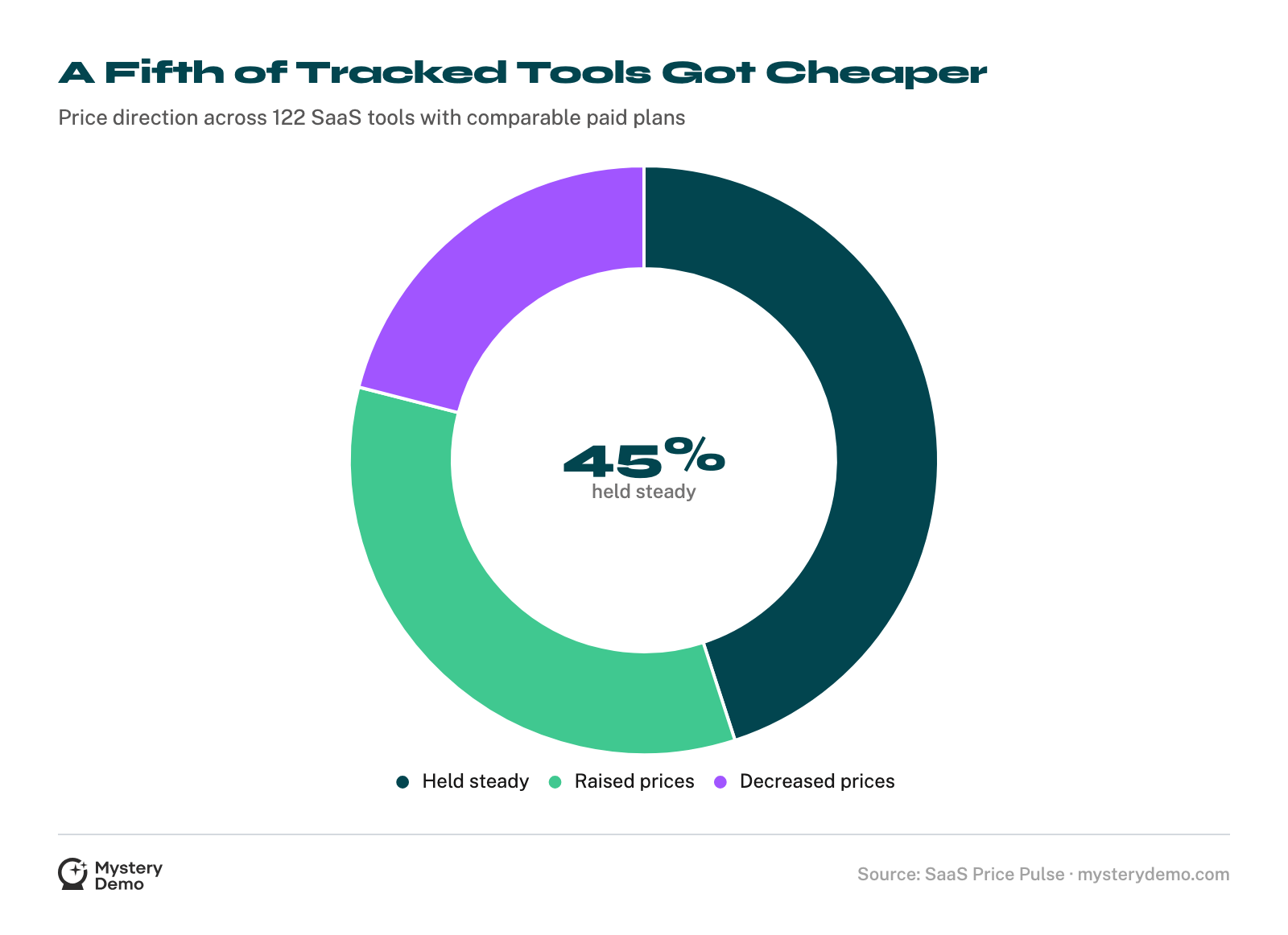
Independent price-page tracking tells a messier story. SaaS Price Pulse compared 122 tools with comparable paid plans and found 34% raised prices, 45% held steady, and 21% cut them.10
A fifth of the panel got cheaper. That is not the direction this category is usually described as moving.
Among the 41 tools that did raise, the average increase ran +119%, skewed by Figma’s +433% jump from $3 to $16 a month and Jasper’s +421%.10 An average carrying a 433% outlier describes the outlier, not your renewal.
The Steepest Increases Arrive Without the Word Increase
Tucciarone’s other observation is that the biggest hikes cluster at vendors owned by private equity firms, where he has personally seen increases as high as 900%, alongside 28% growth in the number of PE software deals in 2024.2
That is one analyst describing what he has watched, not a benchmark anyone measured. Read it as a ceiling anecdote, and read any article quoting 900% as an industry average as a warning about the article.
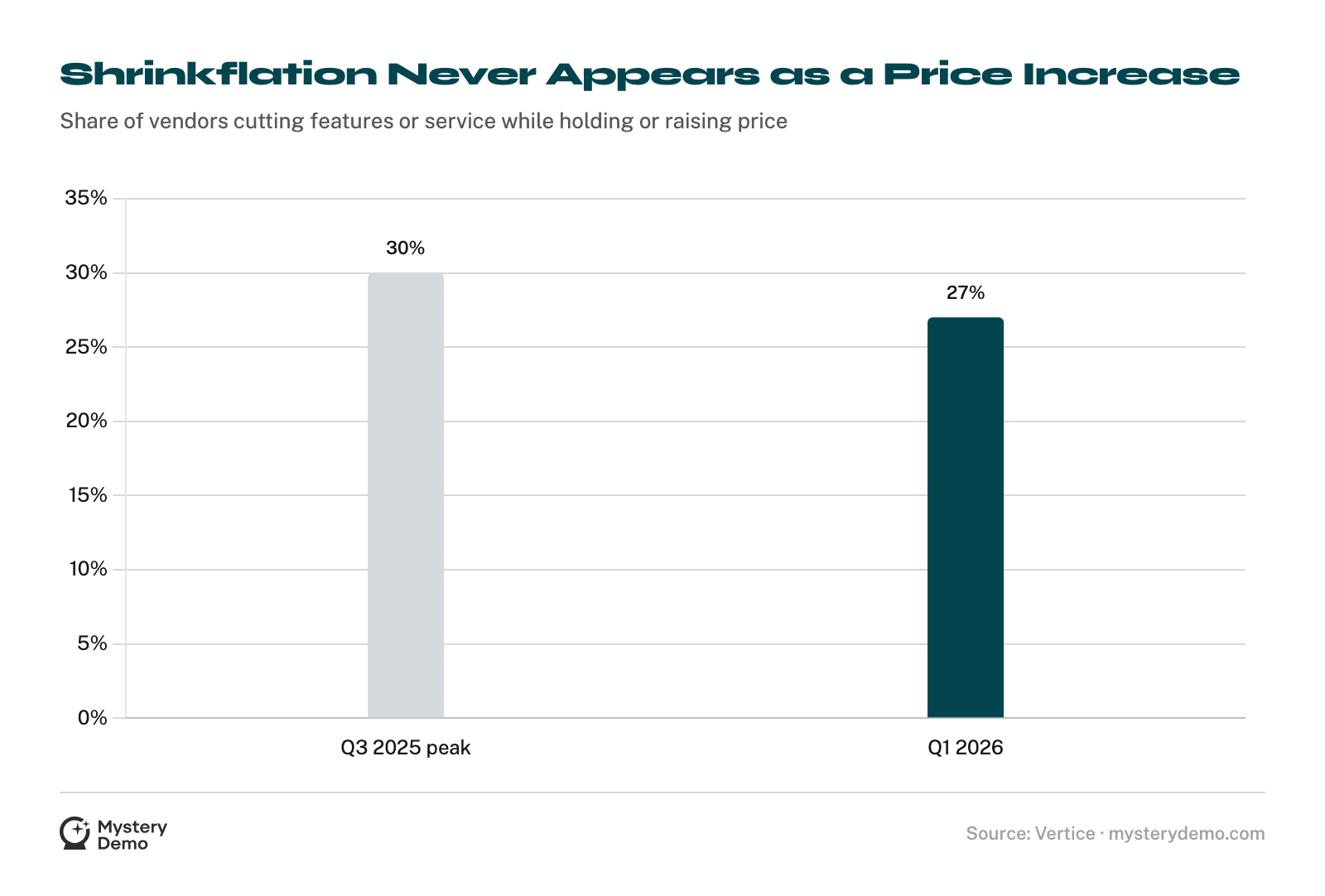
Vertice’s Q1 2026 data shows 27% of SaaS vendors in its processed-spend base practicing some form of shrinkflation, cutting features or service levels while holding or raising price, down from a 30% peak in Q3 2025.4 Over a quarter of renewals still carry that erosion.
Shrinkflation never appears on a renewal as a price increase. It appears as a roadmap.
Zylo’s 2026 SaaS Management Index found 78% of IT leaders reported unexpected charges tied to AI features or consumption-based pricing in the past year.5 Nothing on that invoice is labeled a price increase either.
Renewal Is the Only Moment the Price Is Still a Question
Zylo’s buyer-side negotiation playbook describes the shift plainly: what used to be a routine 5% to 7% renewal bump is now commonly 15% or higher, climbing further on sticky, business-critical apps.3
That framing is procurement commentary inside a buyer’s guide, not a named survey, so treat it as practitioner experience rather than a measured benchmark.
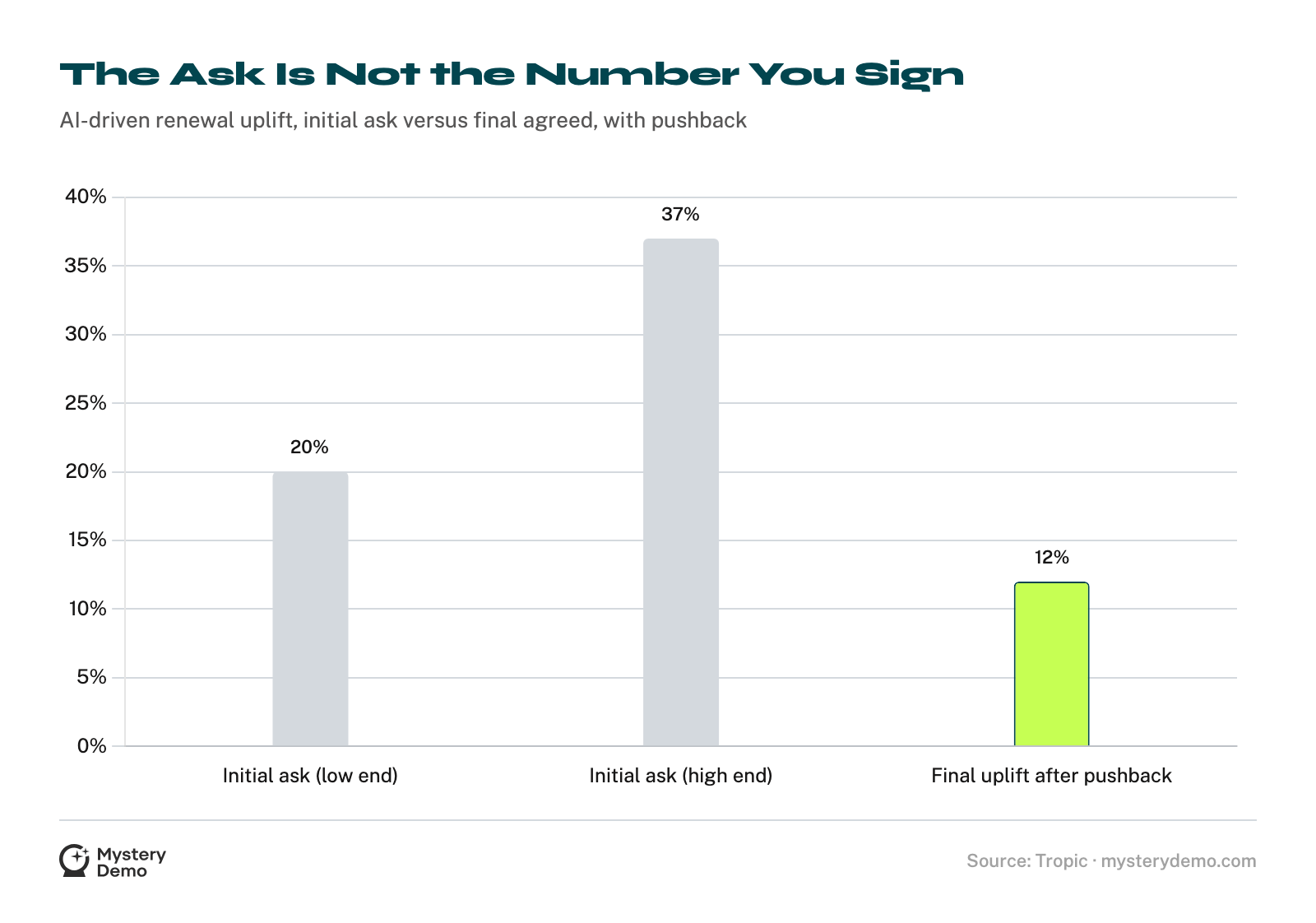
Tropic’s figures on AI-driven renewal increases are measured. Among customers with negotiation flexibility, pushing back cut the vendor’s ask by roughly 55% on average, bringing final uplifts to about 12% against initial asks of 20% to 37%.6
Timing moves the number too. Organizations starting renewal negotiations 90-plus days before expiration save 36% more on average than those who wait for the final month, and in AI categories, engaging 90 days early can almost double total savings.7
.png)
Willingness to Pay Is Not One Global Number
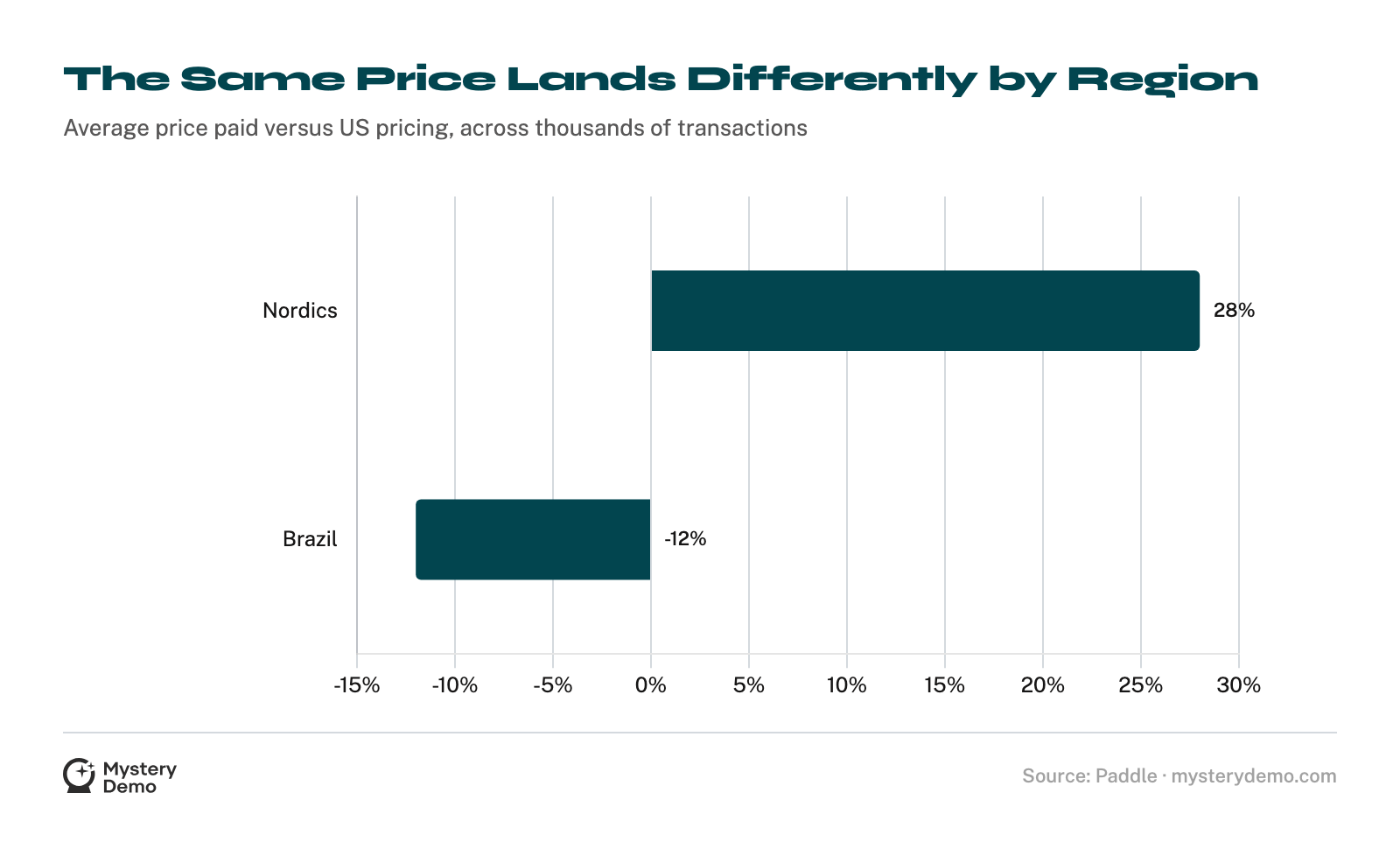
The same increase lands differently depending on who receives it. Paddle’s transaction data across thousands of SaaS transactions shows Nordic customers pay 28% more than US prices on average, while Brazilian customers pay 12% less.8
G2’s 2025 Buyer Behavior Report found that over two-thirds of respondents would pay a premium for AI functionality, but only if vendors clearly demonstrate its value or productivity gains.9 Among power users, a self-identified segment of that same survey, willingness rises to nearly 9 out of 10.9
The premium is real and conditional. The condition is proof.
Frequently Asked Questions
How Much Did SaaS Prices Rise In 2025?
A Gartner VP analyst told CIO that subscription costs from several large vendors rose 10% to 20% during 2025, against IT budget growth projections of 2.8%.2 That is one analyst’s on-record read of several large vendors, not a full-market measurement.
Do SaaS Prices Ever Go Down?
Yes. Across 122 tools with comparable paid plans, SaaS Price Pulse found 34% raised prices, 45% held steady, and 21% decreased them.10 Holding steady was the most common outcome in that panel.
What Is A Normal SaaS Renewal Increase Now?
Zylo’s buyer negotiation playbook describes the routine 5% to 7% bump as having become commonly 15% or higher, climbing further on sticky, business-critical apps.3 It is procurement commentary rather than a named survey finding.
Can You Negotiate An AI-Driven Price Increase?
Among Tropic customers with negotiation flexibility, pushback reduced the vendor’s ask by roughly 55% on average, taking final uplifts to about 12% against initial asks of 20% to 37%.6
When Should Renewal Negotiation Start?
Organizations that begin 90-plus days before the contract expires save 36% more on average than those who wait until the final month, and in AI categories, engaging 90 days early can almost double total savings.7
What Is SaaS Shrinkflation, And How Common Is It?
It is cutting features or service levels while holding or raising price. Vertice’s Q1 2026 data puts 27% of vendors in its processed-spend base in that bucket, down from a 30% peak in Q3 2025.4
Does 15.2% Software Spending Growth Mean Prices Rose 15.2%?
No. Gartner’s 15.2% forecast for 2026, up from 11.9% in 2025, measures worldwide enterprise software spending across all vendors and buyers.1 It blends new purchases, expansion, and price into one figure.
How Often Do AI Charges Show Up Unannounced?
Zylo’s 2026 SaaS Management Index reports that 78% of IT leaders saw unexpected charges tied to AI features or consumption-based pricing in the past year.5 Those charges rarely arrive labeled as a price increase.
Will Buyers Pay More For AI Features?
Over two-thirds of respondents in G2’s 2025 Buyer Behavior Report said they would, conditional on vendors demonstrating value or productivity gains, rising to nearly 9 out of 10 among power users.9
Which Vendors Raise Prices The Most?
A Gartner analyst says he has seen the steepest hikes, as high as 900%, at PE-owned vendors, noting 28% growth in PE software deals in 2024.2 That is his own observation, not a benchmark.
Every figure above is an average built from vendors who are not your competitors. Averages are useful for budgeting and useless for negotiating. The number that decides your next renewal is the one a competitor quotes to a buyer who looks like your buyer.
That number lives inside their sales process, behind a form and a qualification call, and they will never show it to you.
We sit through the pricing conversation as a real prospect and bring back the quote, the uplift schedule, and the discount they reach for when we hesitate. Find out what they charged last year, and tell us which competitor should go first.
References
- Gartner: Gartner Forecasts Worldwide IT Spending to Grow 9.8% in 2026, Exceeding $6 Trillion For the First Time (press release)
- Gartner (analyst Mike Tucciarone, quoted via CIO): SaaS price hikes put CIOs’ budgets in a bind
- Zylo: How to Negotiate SaaS Pricing, A Buyer’s Playbook
- Vertice: SaaS shrinkflation | Insights
- Zylo: 2026 SaaS Management Index
- Tropic: 2026 Software and AI Pricing Trends (report)
- Vertice: Renewal savings vs. negotiation time | Insights
- Paddle: A guide to SaaS pricing models and strategies
- G2: 2025 Buyer Behavior Report
- SaaS Price Pulse: State of SaaS Pricing Q1 2026: Figma +433%, 34% of Tools Raised Prices
.png)


