
By the time a B2B SaaS buyer fills out your form, the buying is mostly over. They have already run their own research, read the reviews, poked at a trial, and quietly decided whether you are in or out.
The sales conversation you think opens the deal usually walks in near the end of it.
On your behalf, we shop a competitor the way their real buyers do: self-serve, skeptical, and mostly anonymous, long before anyone talks to a rep. That means we spend our time on the buyer’s side of the glass, watching how the modern evaluation unfolds.
We collected the most useful, independently verified B2B SaaS buyer behavior statistics we could source on how buyers research, where they look, what they trust, and how much they will spend without ever speaking to you. Each figure is sourced from the studies listed at the end.
If you only keep a handful of these, keep these:
Buyers Do the Homework Before They Raise a Hand
The modern B2B SaaS evaluation starts the moment a buyer feels a need, and the first move is almost never to call you. It is to open a browser and start digging on their own.
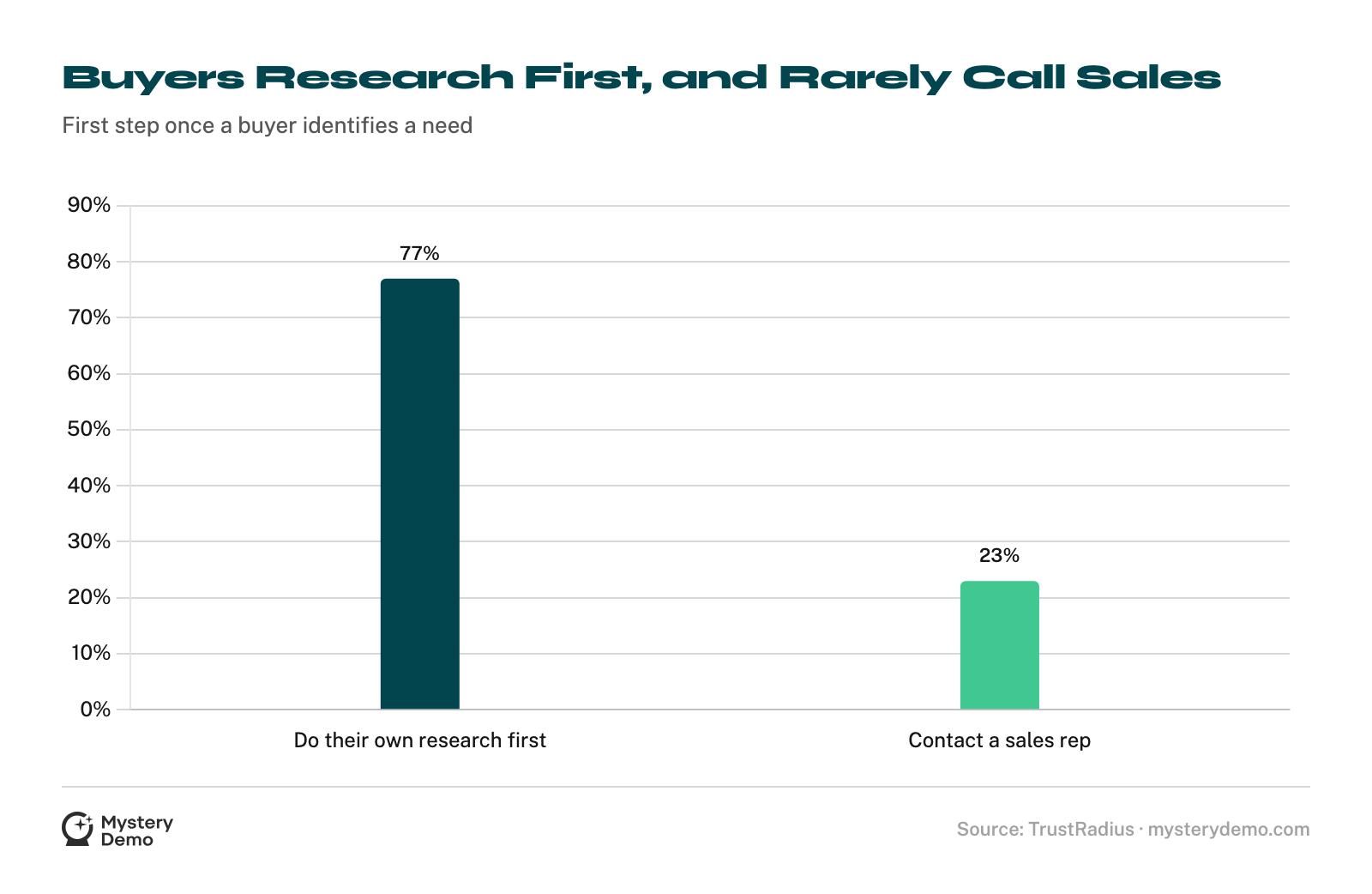
The order of operations has flipped. The rep used to open the evaluation; now they arrive after it is mostly written.
When 69% only want a salesperson once they have decided, the human conversation is a closing ceremony rather than a discovery session. Everything that decided the outcome happened earlier, in private, where the vendor could not see it.
That is the blind spot worth naming. You can read your own win rates all day and still have no idea what the buyer did during the 77% of the journey you never witnessed, on your site or on a competitor’s.
Where the Buyer Really Looks Now
The research itself has scattered across more surfaces than any single team can watch, and the newest one rewired the whole habit in a year.
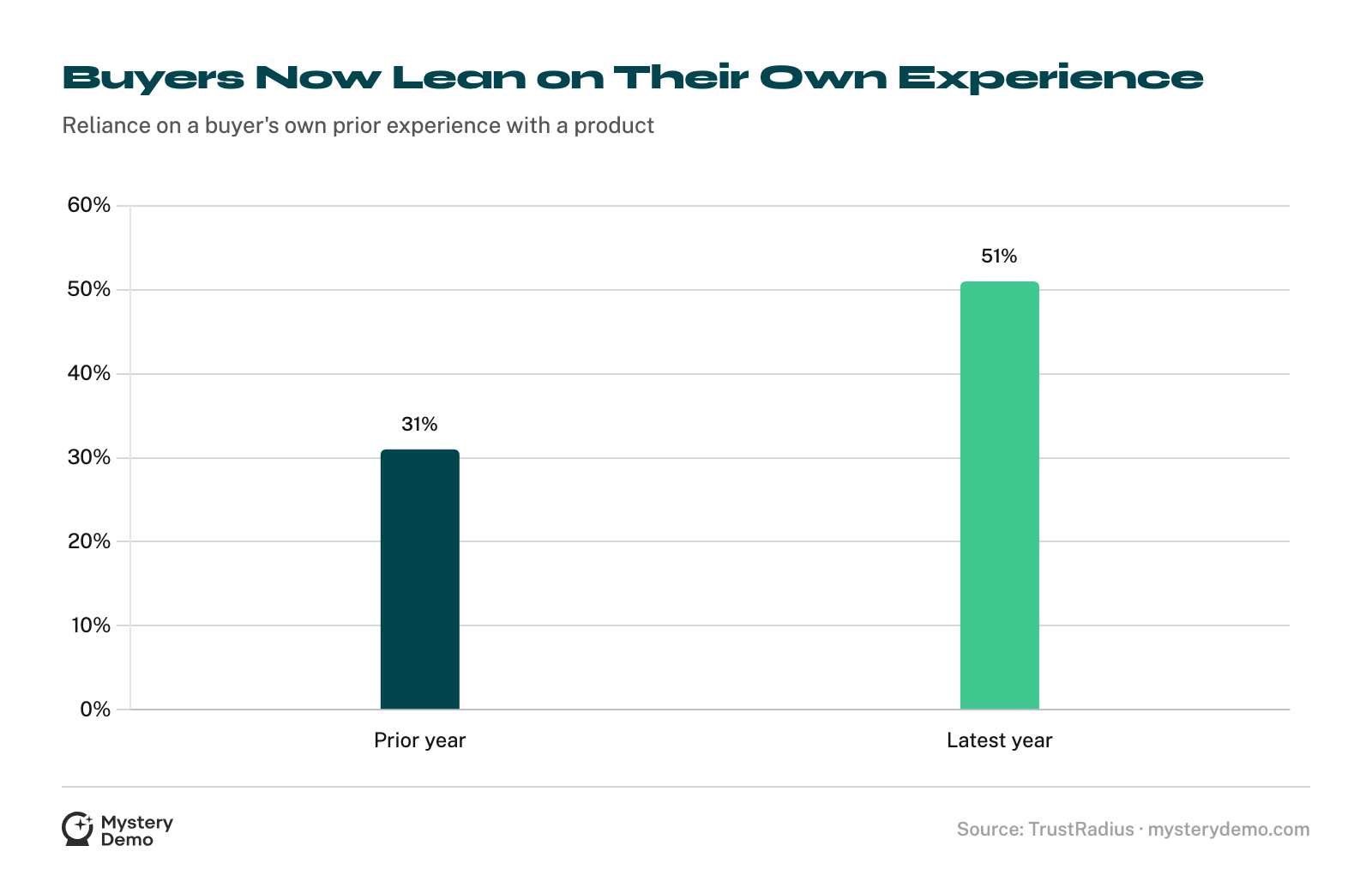
Two of these point the same direction. Analysts are out, and the buyer’s own memory is in: when prior experience leaps 20 points in a year and analyst reports hit a seven-year low, buyers trust what they have personally touched over what an institution tells them.
A trial they ran themselves now outweighs a report they paid to read.
The omnichannel finding has a sharper edge than it looks. A clunky cross-channel handoff is enough to lose the deal: buyers switch vendors over it.
The evaluation is now a UX test the buyer is running on you, mostly without telling you they started.
Of the three channels, the digital self-serve third is the one no vendor can watch a competitor inside, which is the whole reason a real evaluation has to be shopped firsthand.
Reviews and Free Trials Do the Selling
Strip away the sales deck and you find what buyers lean on: other people’s experiences and their own hands on the product. Quality beats volume, and friction is fatal.
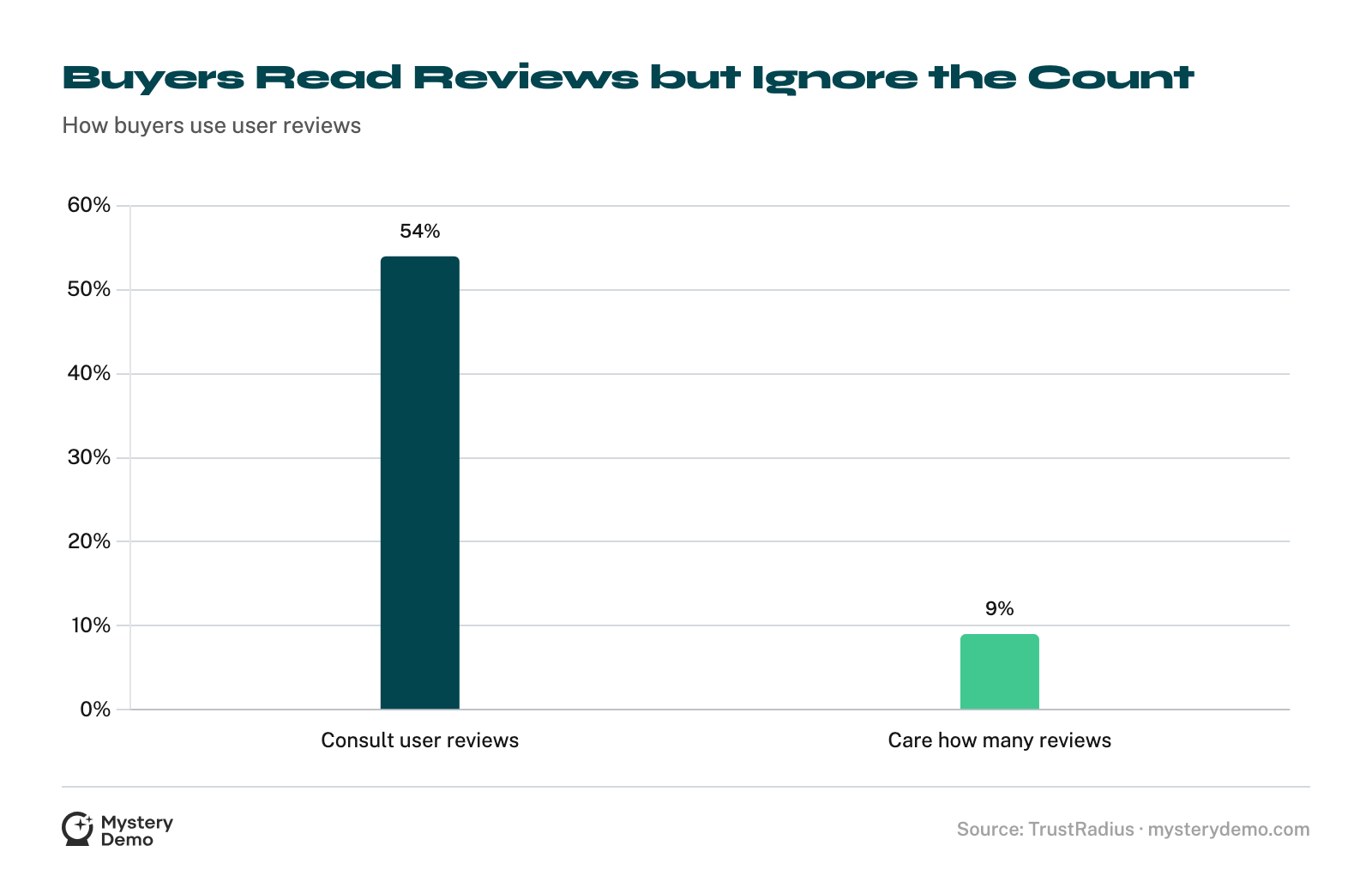
The review finding upends a popular growth tactic. Buyers consult reviews more than almost anything, yet only 9% care how many you have, so the race to farm a thousand three-sentence ratings was a waste.
One credible review from a buyer like them does more than a hundred from strangers.
The trial finding is the bigger story: when the most influential thing in the entire purchase is the product in the buyer’s own hands, the demo becomes a supervised version of something they would rather do alone.
.png)

Buyers Will Spend Big Without Ever Talking to You
The instinct that buyers only self-serve for small, low-risk tools is years out of date. They will commit serious money through a screen.
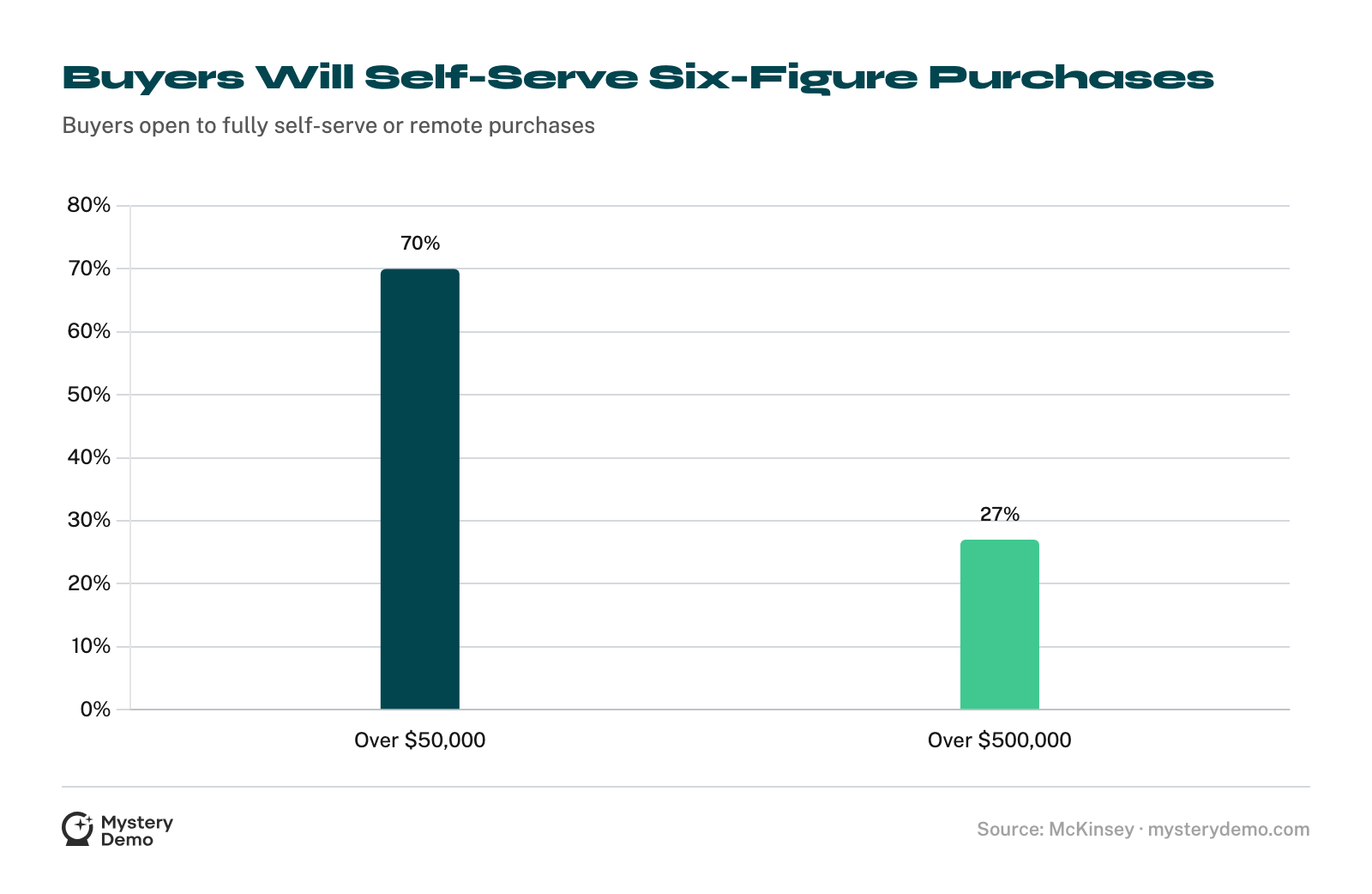
Those two readings are four years apart and cut the data differently. The 2020 study gives one overall number; by 2024 the most digital buyers had pushed well past it to 69%, even as the least digital sat at 19%, and every group still said it was willing.
Big-ticket selling still happens, but the buyer now decides whether a purchase needs a human at all, and increasingly decides it does not.
The dollar figure stopped being the thing that forces a sales conversation. That choice moved to the buyer, and they are exercising it.

The Buyer Got Younger, and Self-Serve Came Standard
The reason all of this is accelerating is that the buyer changed. The committee filled up with people who have never known a software purchase that required a phone call.
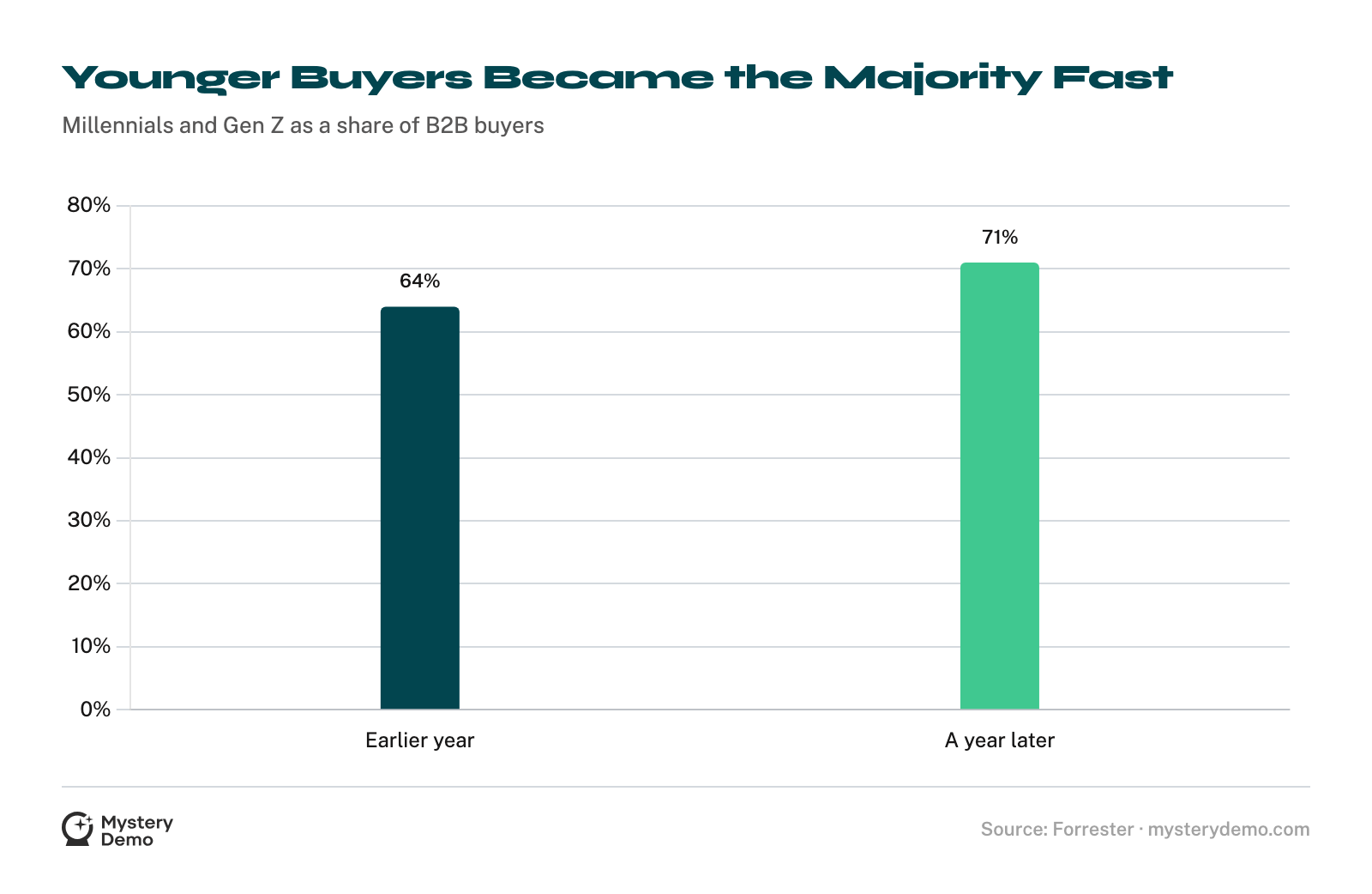
This is the engine under every other number here. A buyer who grew up reading reviews before buying headphones does not behave differently at work: they check the reviews first, distrust the pitch, and want to try before they talk.
As that cohort took over the buying seat, the free trial became the first real step in the evaluation, ahead of the sales call.
For anyone trying to understand a competitor, that is the whole problem and the whole opportunity. The decisive part of the journey now happens where you cannot see it: on a rival’s site, in their trial, inside their pricing page.
The only way to know what their buyers experience is to go through it as one.
So become the buyer yourself.
We go through your competitors’ funnels exactly the way their prospects do, unassisted and skeptical, then hand you the whole picture: what their trial feels like, what they charge once you dig, where the signup quietly stalls, and where a buyer decides against them.
Right now someone is doing exactly this to you, and you will never hear what they concluded. Talk to us about the competitors winning those silent comparisons, and we will run the same evaluation on them.
Frequently Asked Questions
How do B2B SaaS buyers research software in 2026?
Mostly on their own. 77% say their first step is their own research, not a sales call3, and 79% say AI search has changed how they research2.
Do buyers prefer to buy without talking to sales?
Increasingly, yes. 69% engage a salesperson only once they have already decided1, and essentially all buyers want to self-serve at least part of the journey4.
How much of B2B buying is now self-service?
Nearly half of all business purchases are completed as self-service transactions6, and buying splits roughly evenly across in-person, remote, and digital self-serve channels7.
Will B2B buyers make large purchases self-serve?
Yes. 70% are open to self-serve or remote purchases over $50,000, and 27% over $500,0008. By 2024, willingness to transact $500,000-plus remotely ranged from 19% to 69% of buyers7.
How important are free trials to B2B buyers?
They are the single most influential resource in tech buying, named by 77% of buyers, up from 67% a year earlier4.
Do online reviews influence B2B software buyers?
Yes, but quality beats quantity. 54% consult user reviews, while only 9% care how many reviews a vendor has4.
Does the number of reviews matter?
Barely. Just 9% of buyers care about the number of reviews a vendor has, so a handful of credible, relevant reviews outperforms thousands of thin ones4.
How much does pricing transparency affect B2B buyers?
A lot. 72% say transparent pricing makes them more likely to buy4, 81% want to find pricing on their own, and 16% drop a vendor entirely when pricing is hard to find3.
How fast do B2B buyers expect ROI?
Fast. 78% expect to see a return on investment within six months of implementing software1.
Has AI search changed B2B buyer behavior?
Sharply. 79% of buyers say AI search has changed how they conduct research2, reshaping which sources they reach for first.
What is the rule of thirds in B2B buying?
It is McKinsey’s finding that buyers split roughly evenly across three modes: one-third in-person, one-third remote, one-third digital self-serve, holding across geographies, industries, company sizes, and deal types7.
Do B2B buyers want an omnichannel experience?
Yes, and they enforce it. More than half want a true omnichannel experience and will switch suppliers if the experience is not smooth7.
Are analyst reports still influential with B2B buyers?
Less every year. Use of analyst reports fell to 16%, a seven-year low, as buyers lean on peers and their own experience instead5.
Do buyers trust their own past experience?
More and more. Reliance on a buyer’s own prior experience jumped from 31% to 51% in a single year4.
Who are B2B software buyers today?
Younger than ever. Millennials and Gen Z became the majority at 64%, then climbed to 71% of B2B buyers a year later6.
Do younger buyers research differently?
They start with peers. 41% of Gen Z and 29% of millennials name checking review sites as the first step in their buying journey3.
When do B2B buyers contact sales?
Late. Only 23% contact a rep as their first step3, and 69% wait until they have already made their decision1.
What does buyer behavior mean for competitive research?
It means the decisive part of the journey happens where you cannot see it, on a competitor’s site and inside their trial. To know what their buyers experience, you have to go through that funnel as a real self-serve buyer, which is exactly the primary-source work we do.
How do you research how a competitor’s buyers experience them?
You shop the competitor the way a real buyer does: run their trial, read the reviews they show up in, find their real pricing, and document where the self-serve experience helps or leaks, the same primary-source work we deliver.
References
- G2: 2024 Buyer Behavior Report (2024)
- G2: 2025 Buyer Behavior Report (2025)
- TrustRadius: 2022 B2B Buying Disconnect, The Age of the Self-Serve Buyer (2022)
- TrustRadius: 2023 B2B Buying Disconnect (2023)
- TrustRadius: 2024 B2B Buying Disconnect Report (2024)
- Forrester: Younger Generations Are Shaking Up B2B Buying (2024)
- McKinsey: Five Fundamental Truths, How B2B Winners Keep Growing (2024)
- McKinsey: These Eight Charts Show How COVID-19 Has Changed B2B Sales Forever (2020)
.png)


